See how spheroidizing changes bearing steel material by reshaping internal carbides, affecting deformation and machining without changing the bar’s outline.
Learn how continuous casting mold motion leaves repeating surface marks, how cycle time becomes spacing, and why a visible line is not necessarily a crack.
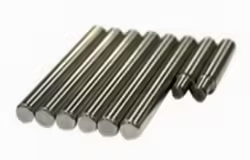
Explore bright bar vs black bar through oxide scale, finishing, and reflected light. Learn why color and shine do not identify steel grade or strength.
Compare round steel bar sizes in inches and millimeters. Learn why one inch is 25.4 mm, how fractional sizes convert, and what nominal dimensions mean.
Explore bearing steel material properties through tiny inclusions, repeated rolling contact, and fatigue, while separating internal cleanliness from hardness.
Explore continuous casting cooling through the solid shell, liquid core, uneven contraction, and surface reheating that can contribute to cracking in billets.
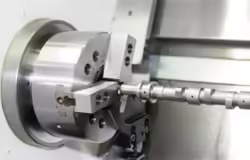
Follow bright steel bar through feeding, gripping, turning, and parting in a CNC lathe. Learn why long stock needs support and why some material remains.
Understand steel square bar dimensions across flats and corners, why turning a square changes its apparent width, and how circles compare with its outline.
Use the round steel bar weight formula with a 20 mm example, consistent units, and density assumptions. See why diameter changes matter more than they seem.
Feeding a 150mm piece of metal into a roughing mill designed for a 300mm block doesn’t just waste your equipment’s mechanical capacity—it actively destroys the tensile strength of your final product. When you set out…
When a procurement team or junior engineer asks if is billet aluminum stronger than steel, the physical and metallurgical answer is no. The confusion stems from the word “billet.” On the shop floor, “billet” is…
Steel buyers often see steel billets and rebars in the same supply chain, but they serve different purposes. A billet is a semi-finished steel product used as a starting material for further rolling, while rebar…